A leap, a kettle, a troop, a bask, a tower, a cackle, a bloat.

If you’re new to “Wherever you go, there you are” you might want to catch up by reading the first three installments of African Safari.  You can do that by clicking here, here, and here.

African Safari – Part 4
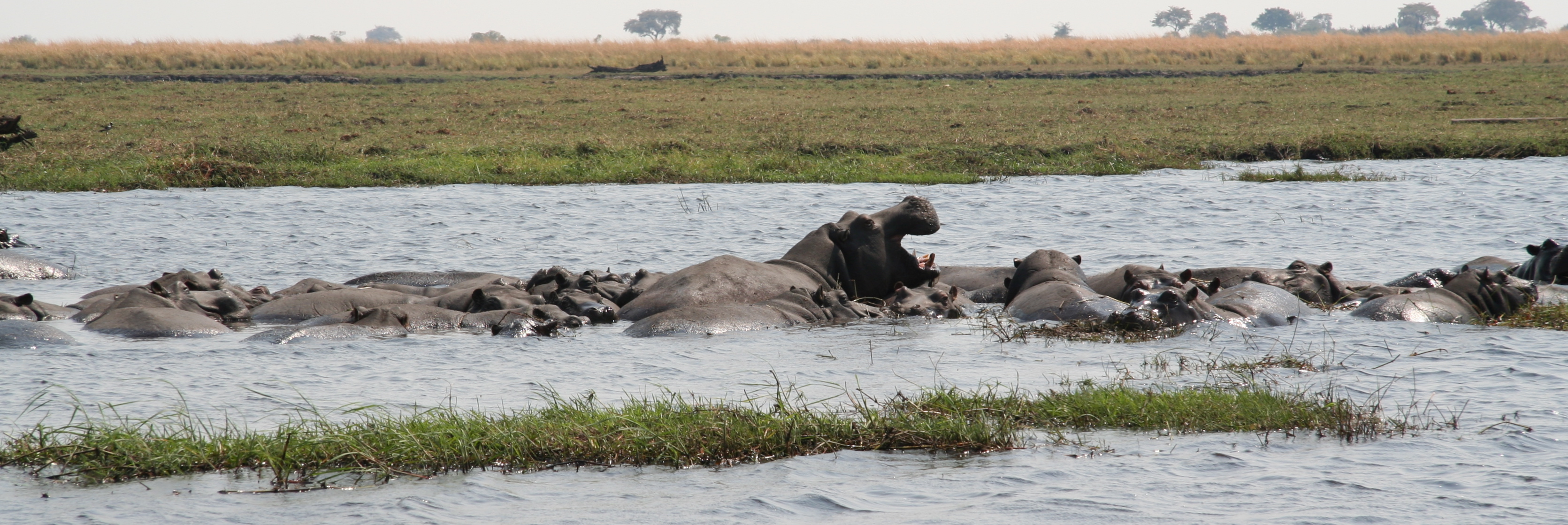
A group, a bunch, a gathering of hippopotamuses is called a bloat.

                                                 A bloat of hippos chilling in the Chobe River.

We were “knocked up” at 5:30 our third morning at The River Club.  (The innuendo refers to a knock on the door to wake you, rather than … whatever you were thinking).

After breakfast, we seven — Marilyn and Peter B, Arden and Charleen, Bruce, husband Peter and I — headed to Botswana. It was an hour’s drive to a point on the Zambezi River where we would be taken across by motor boat, our van, by ferry.  The crossing is notorious for hours-long lines to cross a relatively narrow stretch of river, all complicated by the politics of the four countries that touch there — Zambia, which we were leaving, Botswana, where we were going, non-confrontational Namibia, and unpredictable Zimbabwe. Each makes claims on the only place in the world where four countries meet, though even that “point” is argued. Read about the four corners “quadripoint” here.

The magic that began the day before in Simonga Village wafted along with us during a blissful several hours on the Chobe River near Kasane, Botswana. It was like moving through an exquisite, real-life, real-time diorama.  No Disneyland safari park, this!

Between them, our eagle-eyed guide Russell, and safari organizer and raconteur Kate, kept us enchanted with their encyclopedic knowledge and endless stories!

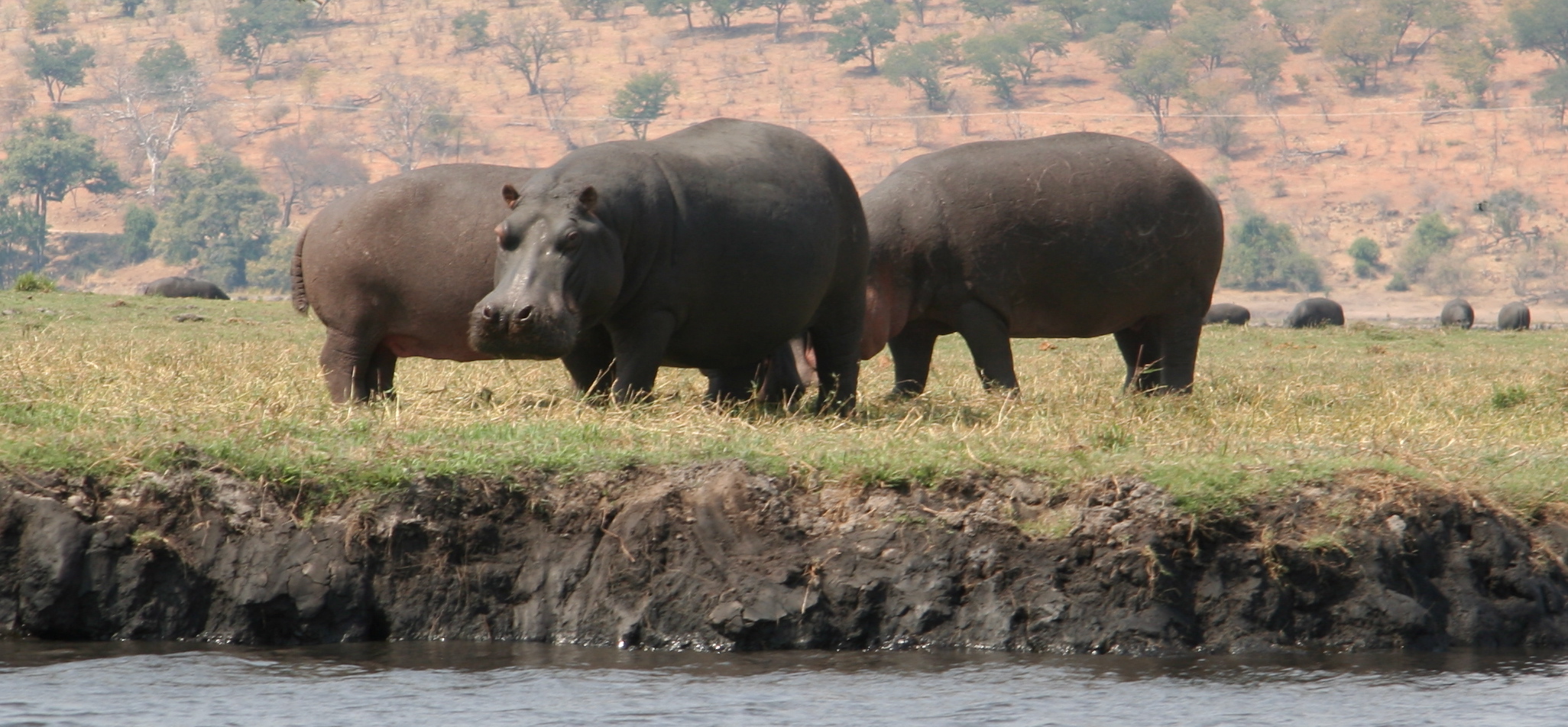
Russell spotted this well-camouflaged, four-foot long water monitor lizard stretched sinuously on a log.IMG_2566Later, we saw the same bloat of hippos munching on grass, even though they don’t normally eat in  daytime. Hippos don’t see well, but this one acted as if he had 20/20 vision.
2 Chobe - IMG_508_2Cape buffalo, said to be as dangerous as hippos, look as if they should have ferocious headaches from the massive horns that look like heavy-duty truck bumpers.2 Chobe - IMG_474_2 We got a “smile” from a medium-sized crocodile as we passed. The rest of his bask lurked nearby.2 Chobe - IMG_476_2 None of us will ever forget this memory of elephants at river’s edge, but the two dead

IMG_2586_3ellies we saw later were a terrible sight as well as a gag-inducing one.  We held our noses, all except Peter who can’t smell at all, not even several tons of dead elephant just beyond the bow.  Between Peter’s faulty nose and his sometimes enviable ability to sleep through anything, he missed many of the most memorable events on our trip.

Though Kate was the story-teller, the entertainer, Russell had a repertoire too. He told us that he’d guided one of President Bush’s daughters earlier that year, [2005] so the secluded spots he picked for his safari-goers to “go,” were now referred to as “George” or “Laura!”  We laughed at the symbolism of Russell’s “bathroom humor.”  He also confessed that his little daughter always begged him to play “Barbies” with her.  The idea of that big fearless outdoorsman fitting a Barbie doll into her minuscule clothes made us roar with laughter.

From Kasane we flew in two toy-like airplanes to a landing strip that wasn’t much longer than our driveway at home. This was the back of beyond! The “terminal” was a metal awning set on four poles, Kate handled the bags, and a hulking Land Rover awaited, keys in the ignition. Russell’s smile was set on high beam as he hopped into the driver’s seat. “Now our work begins,” he said.

Until then, none of us realized that we hadn’t been “on safari” yet. We’d enjoyed a well-orchestrated, gentle easing-in to the real adventure to come in the African bush.

That day we had seen a small zoo’s worth of animals, but it would be another twenty-four hours before we saw a dazzle.  And we never did see a leap.

* * *

More stories from our best trip ever will follow before too long, but for now I’m heading back to where I am  — here!

Some of the photos above were taken by Peter B.
We took the same shots, but he had the better camera and shared his results with me. 
 

It takes more than a village.

You can re-read parts one and two of our safari saga here and here if you‘d like.

African Safari – Part 3

Our second full day began with a morning trip to Victoria Falls, one of the seven natural wonders of the world, but it was the afternoon that provided a stunning highlight to our trip. Our group of seven was taken to Simonga, the nearby native village sponsored by our host camp, The River Club.

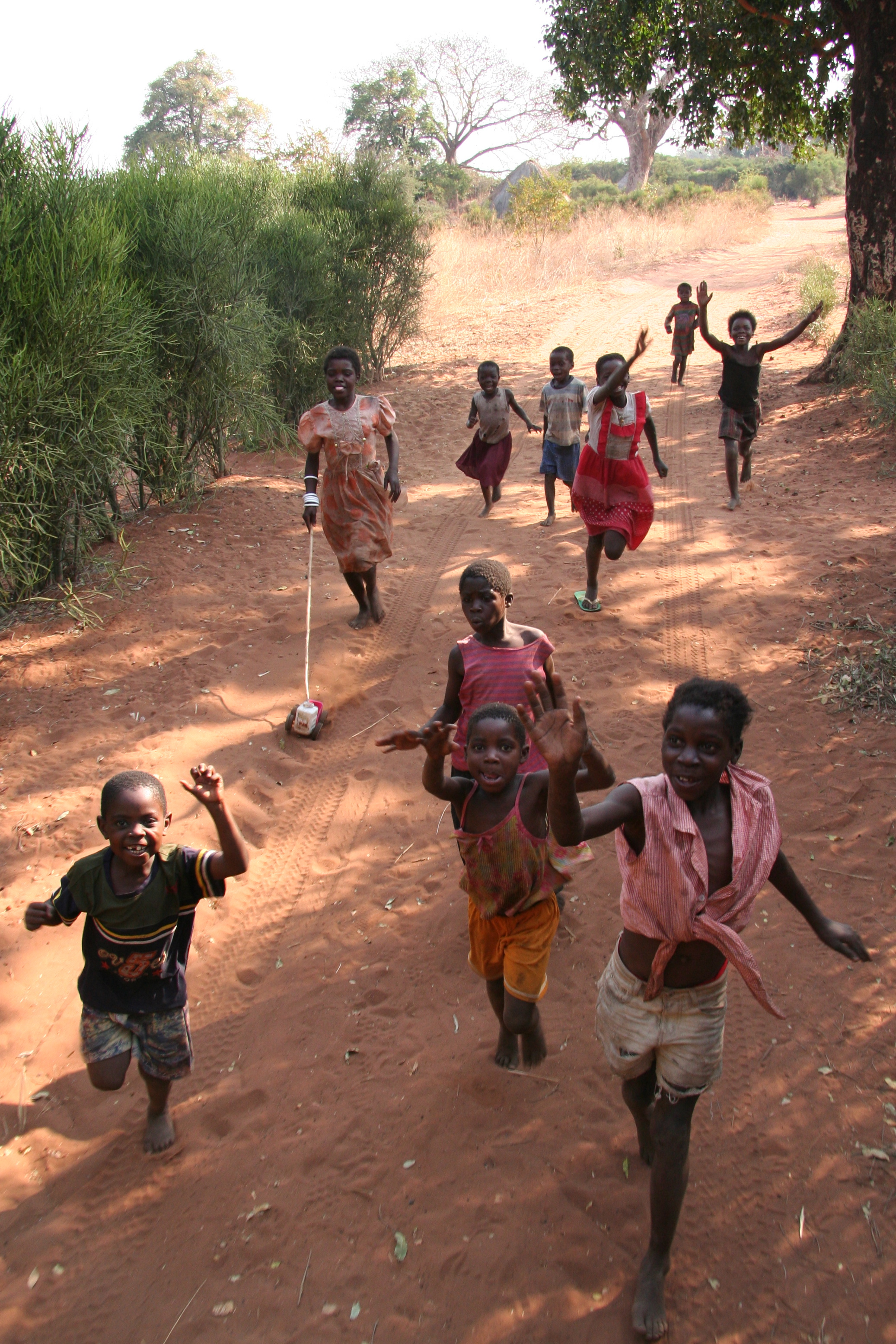
As we drove into the village on a rutted track, children materialized out of the orange dust that poofed up behind us. They followed, shouting and laughing delightedly, so thrilled to see usTheir joy at our arrival made me wonder at the price we pay for our own children’s happiness.

1 RiverClub - IMG_419_2

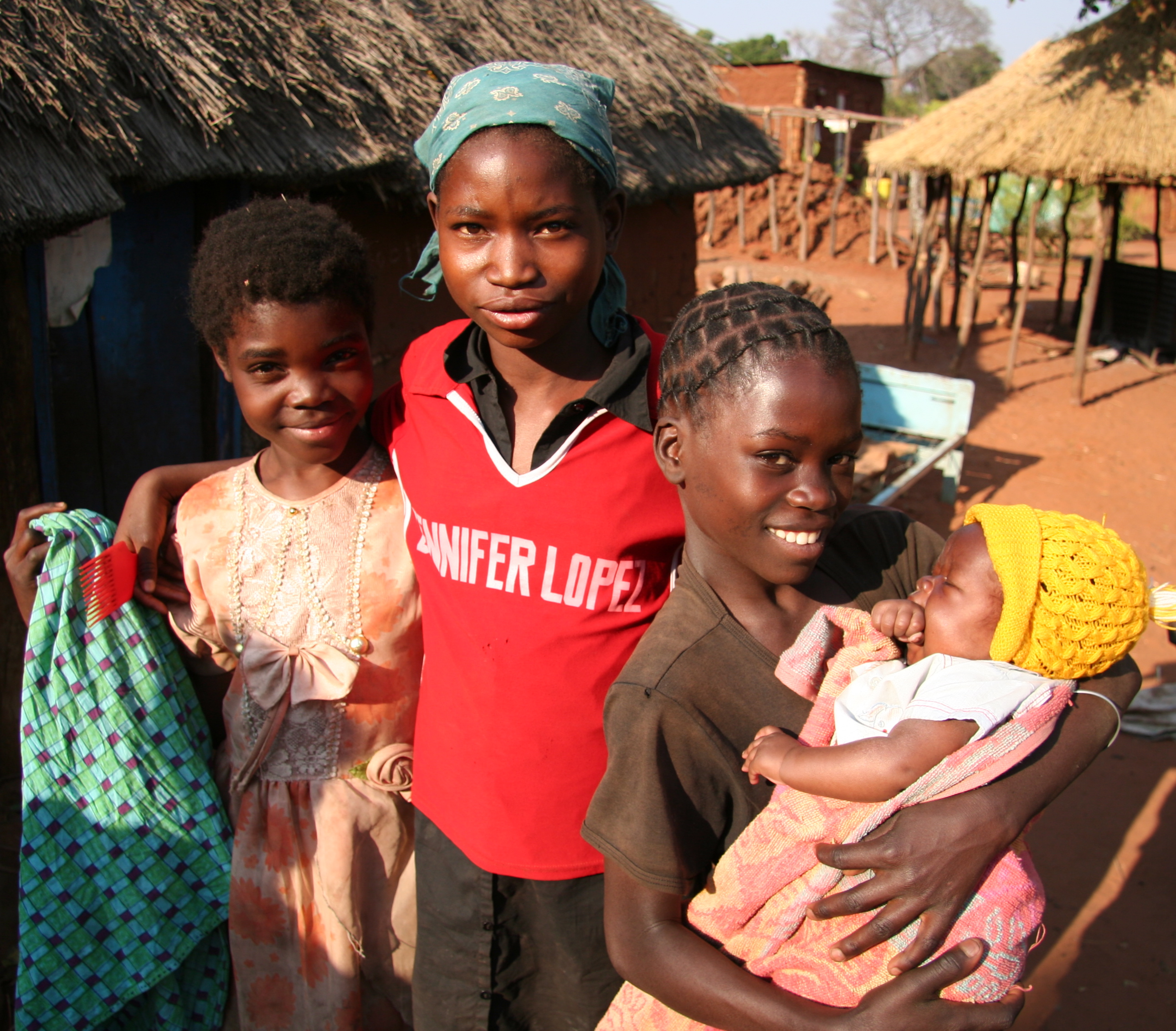
The people live in tiny dirt-floored, reed and mud huts, with the barest necessities, the children’s playthings are broken hand-me-downs, and their clothes are CARE package cast-offs. Yet they mugged for our cameras and screamed with joy when they saw themselves in the viewfinders. They touched us gently, were unfailingly polite, and they spoke to us in near perfect English.

The taller girl below didn’t know who Jennifer Lopez was, but she loved the bright red shirt.  She peered into my eyes as she followed me around, then she finally whispered, so sweetly, “Please, Mma, may I have your bag?”  I hated to say no, but I needed my little waist-pack for my passport and money. I did give her a pack of gum, and I knew, when I got home, that I would send a parcel to the village, and my bag would be in it.  (She shared the gum but none of them knew it was just for chewing — they thought it was food and swallowed.)

1 RiverClub - IMG_441_2

The older boys showed off their soccer skills with a shredded ball, and the girls took us to their new concrete block, one-room schoolhouse.  They were so proud.

1 RiverClub - IMG_436

Sadly, the AIDS menace hovers over their lives. In the schoolyard, a hand-painted sign nailed to a tree, warned, “You either have AIDS or you know someone who does.” One young girl, her cheeks tear-streaked, had recently lost her mother, her father, the year before.  She and her little sister were forced to live alone, shunned by others because both parents had died of AIDS.  Village women shared their meager food, but nothing more.

IMG_2511_2

When Peter and I went to bed that night we found hot water bottles tucked under the covers!  It had been quite cold the previous night — wintertime in the Southern hemisphere — so the extra warmth was welcome in our unheated three-walled hut. Yet we enjoyed relative luxury while just a mile away, women carried water several miles from the river to their village where there was no electricity, no plumbing, little food, less money.

Earlier, I had bathed, bubble-covered, in an old claw foot tub, yet the natives had no way to bathe properly, and only lumpy pallets laid on dirt floors on which to sleep.

We learned that everyone in our group was as moved as we were, by the children especially.  Russell told us he takes every group he guides to Simonga Village, but he’d never seen such excitement as he’d seen that afternoon. “It was a magical day,” he said. “There was a spark.”

* * *

Simonga Village is prosperous compared to most, because it is sponsored.  We all wanted to provide books and toys, school supplies and clothes, but we were cautioned not to send new things because it would upset the dynamic between the village elders and the sponsor.

One couple sent used library books, another, uninflated soccer balls and pumps, and Peter and I sent barely-used coloring books, slightly flattened crayons, and a rainbow of leftover wool yarn my dad used when he hooked rugs.  My little bag was in the box too.

* * *

I was just about to publish this post when I thought to Google “Simonga Village.”  Go here and here to read about thrilling changes that have taken place.  And be sure to look at the photo gallery on the “For the love of Africa” site. You’ll note one thing has not changed — the AIDS warning on the tree in the schoolyard.

 (The first and third photos above were taken by Peter B.)  

Latitude attitude resolved.

African Safari, Part One, “Always go downhill” provided the first glimpse of the Clarkes best trip ever. Here’s the next installment:

African Safari – Part 2

Eighteen hours in the air was a bum-numbing flight and that was just the trans-Atlantic leg of our journey. I’d struggled to get my head around the fact that even though there’s only a six-hour time difference between southwest Virginia and our final destination, a Rhode Island-sized corner of Texas-sized Botswana, there were still some twelve thousand miles to traverse from north of the Tropic of Cancer to south of the Tropic of Capricorn.

We had an overnight in Johannesburg, South Africa, then the following morning, an hour’s hop to Livingston, Zambia.  A tour group driver met us at the tiny airport to take us the few miles to the edge of the Zambezi River where we would meet our guide.

Tall, burly, sun-weathered Russell, with a smile as wide as the Zambezi, was, we were to find out, revered amongst guides in the region. That we were lucky enough to have him lead us was the first bit of magic that threaded through our trip. He wasted no time handing us into a rickety aluminum motorboat to ferry us downriver. As we putted along he pointed out crocodiles and hippos that I’d thought were large rocks in the water!

Though we stayed in four tented camps over fourteen days, we were eased into the safari proper with two nights at The River Club, a lush, flowery oasis that was totally unlike whatever it was I’d expected.  After a brief orientation on the terrace of the shabbily elegant Edwardian house — think “Out of Africa”— we were shown to our thatched hut. Walled on three sides with reeds and mud,  the fourth side was completely open to the river which was a protective arm curved around the property.

It doesn’t take long to settle in when you’ve only been allowed one duffel, one backpack. Before we returned to the main house to meet Kate, Russell’s fearless side-kick/safari coordinator, and our five fellow travelers, I had to try the plumbing.  I wanted to see for myself if water in the southern hemisphere really does go down the drain counterclockwise, opposite from the northern hemisphere.  It does!

At dinner I remarked on the unusually high chain-link spiked fence that encompassed three sides of the grounds, while at river’s edge the craggy perpendicular drop-off was an impenetrable barrier to any crocs lounging below. “Is the fence to keep animals out?” I asked.

“No,” Russell said, “Zimbabweans!” There was, and still is, a violent faction in Zimbabwe. The Zambezi is the border between Zambia and Zimbabwe and provides a natural defense. Even the most dangerous Zim militant wouldn’t brave those waters at night, and guards patrolled River Club’s fences until daylight. So, no worries, unless an agile hippo found a way to scale the cliff…!

At bedtime, I apologized to Peter for having been such a brat when he’d suggested a safari. “I  love it already,” I told him. “I want to come back.”  We’d been in Africa thirty-six hours. He nodded and smiled, relieved.

We’d wondered about traveling for two weeks with five people we didn’t know — in each other’s pockets as it were — but after the first evening the two of us agreed we were part of  a really compatible group. The dinner conversation was lively and laugh-filled, everyone, so interesting, and Russell and Kate were an engaging team.

It was going to be a great trip!

Arden, Arleen, Russell, me, Peter, Marilyn, Kate, Peter B, Bruce.

Arden, Arleen, Russell, me, Peter, Marilyn, Kate, Peter B, Bruce.


Always go downhill.

If you’ve been following “Wherever you go, there you are” you’ve probably read my “About.” page. In it I wrote that posts about our travels were on the horizon. “Always go downhill” is a first glimpse of our very best trip ever!

We were lucky enough to have had some amazing adventures. Our gallivanting ended a few years ago when husband Peter’s lapsing memory made going anywhere difficult. As he jokes now, “Wherever he goes, he gets lost!”

But, no complaints!  We’ve been able to go places and see things that most people only dream of. We did a lot — nine trips in six years, plus family trips to the beach. Unforgettable all, to me anyway. My photos help Peter to remember bits and pieces.

African Safari – Part 1

We're at Victoria Falls, Zambia
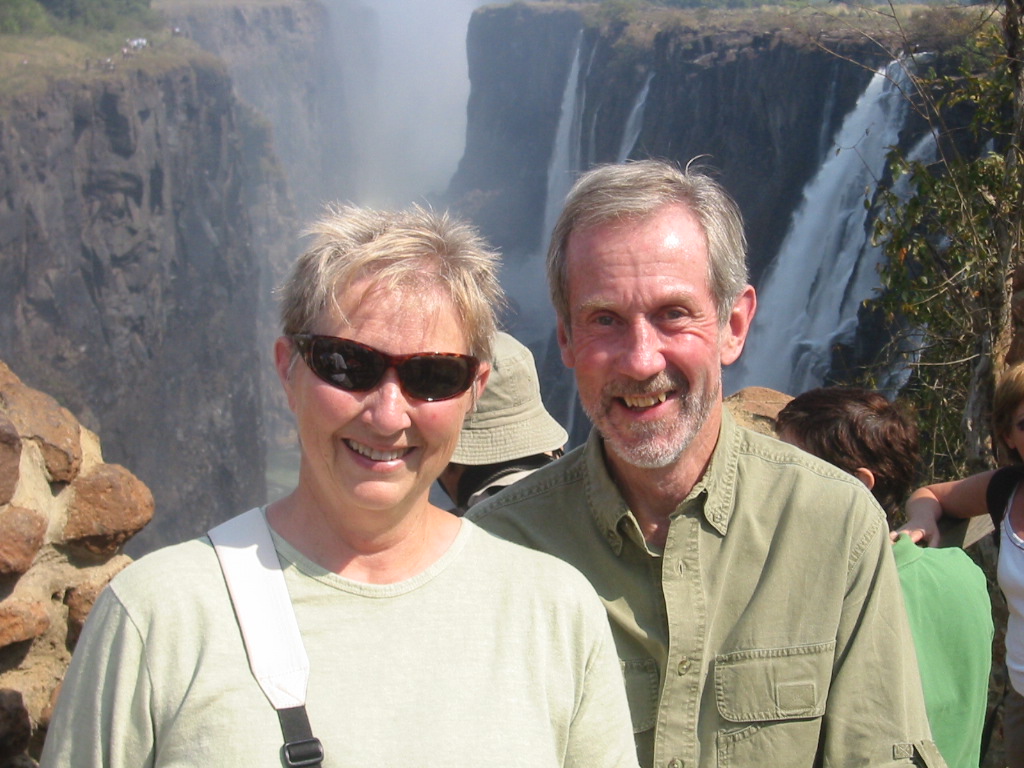
Judy and Pete at Victoria Falls, Zambia.

Until eight years ago the only international travel I’d done was to England with my English husband. Well, I had been to the Canadian side of Niagara Falls when I was ten and to Nogales, Mexico, the border town south of Tucson, in my twenties. In my provincial view, those weren’t really “international” trips because there were no oceans to cross, no passports required. Oh, there was the one quick jaunt to France as part of a trip to England too — you can read “Photographic memories” here if you want.

I didn’t care if we ever went anyplace other than England.  But one January day eight years ago Peter threw into a casual conversation that he’d always wanted to do an African safari.

What do you mean, safari?” I yelped. I had never been adventurous, and he had never mentioned going any place other than across the pond to England.

I was a sixty-six-year-old brat and pitched every argument I could think of.  But when he asked if there was anyplace I might like to go besides England, I surprised both of us. “Norway,” I said. Norway wasn’t his cup of tea, but he scheduled a trip for June,  midsummer. What could I do but agree to a safari?

No sooner did he book a Botswana safari than we started getting information about the vaccinations needed, the preventative medications to carry, the clothing restrictions (grays, greens or khakis only, no blues, white or bright colors), and the limited bag sizes.

“Why would anyone want to go to a place where catching malaria, polio, hepatitis, typhoid, or yellow fever is a possibility?” I fretted.  A four-page questionnaire asked about our health history, diet limitations, and interests. One query left me panicked: “Will you be comfortable on long game drives where there are no ‘facilities’?”

Short answer: NO.  I’d never in my entire life been able to “relieve myself” in the woods.  An excuse for me to stay home perhaps? Would Peter go by himself?

I sought help from daughter Carolynn, an experienced camper who never had qualms about “answering nature’s call” in the out-of-doors. “Always ‘go’ downhill,” was her advice.  Not easy in the pancake-flat savannah we would be visiting.

In a travel catalog I found what I thought was a better answer, a Urinelle. The thing looks like an elongated paper ice cream cone, though open at both ends. It is designed for women to use when traveling in countries where the facilities are unhygienic. It’s meant to mimic male plumbing. All women know that men can be very resourceful when there are no plumbed facilities available.  However, when I tried the darned thing in the privacy of my own bathroom, my aim was off and I ended up mopping the floor.  

Going on a trip had just taken on a whole new meaning!

It’s a good time.

Three years ago, when I told husband Peter I was going to take a line dancing class, he envisioned the Radio City Rockettes and he laughed. Then he did his version of a high step-kick across the kitchen.

And I howled.

No, we are not the precision long-legged beauties you see in Macy’s Thanksgiving Day Parade. But we do dance in a line, without partners, and we follow a choreographed pattern of steps … at least that’s the idea.

Our class of “seniors” has a heck of a good time.  We press on, never mind that we don’t remember the steps that go with the music from one week to the next.  I look forward to Thursday afternoons.

Cass, our instructor, flits across the floor the way a reflection bounces off water.  She must have wondered if she’d ever get through to us.

“Mama Maria” was our first dance. We caught on so slowly. As simple and boring as it seems now, it took us weeks to master.  We now know the names of steps — grapevine, rocker step, jazz box, kick ball change, Charleston, cha cha, hitch —but putting them to the music without Cass’ repeat instructions?  Never happens.

The “old faithfuls” from the original bunch, Lois, Joanne, Barb, Judy R and me, have been joined by “new faithfuls,” Gini, Pat and Gay.

Lois the stalwart never forgets the steps once she’s learned them, though she refuses to count much to Cass’ dismay. “I can’t count and dance,” Lois grumbles. “Which do you want me to do?”  Joanne insists she’ll never learn whatever new dance Cass trots out, but she counts determinedly, concentrates so hard her red hair sizzles, and learns the routine quickly. Barb has a loosey-goosey interpretation of the steps that works for her. Judy R is so polished and perfect when she slips into the room during her lunch hour that she looks the part, so it doesn’t matter if she misses a kick-stomp here, a cha-cha there.

Me, Judy C.? I sweat. You know the saying, “Southern girls glisten, Yankee girls sweat”?  I’m a Yankee.

Early on I caught on to the new dances more quickly than now. “I was better but I got over it,” as my dad liked to say. I had to sit out most of last year because of my crumbling knee, see Good to go wherever.  For months, all I could do was try to learn while sitting on a chair and moving my feet to “mark” the choreography: chair dancing. That helped some but chair dancing is probably akin to learning how to pole dance without a pole. Not that I’ve ever tried it, nor would I!

Now that I’m able to dance again, my balance has gone kaflooey.  Some of the twists and turns make me feel as if I’m on a Carousel riding a horse that’s made a dash for greener pastures.

Line dancing is usually done to country music, true. But our Cass has eclectic tastes that veer to breakdancing songs, Lady GaGa, gentle waltzes and even Christmas carols. I’m not a fan of the singer who wore a costume made of raw meat, but once I got the steps to “I like it rough,” I changed my tune.

Darius Rucker’s “Wagon Wheel” is our current challenge.  Most of the group have it nailed, but the full turns make me feel like I’m in a centrifuge.  I may have to sit that one out at the Christmas performance.

Alan Jackson’s “Good Time” is my favorite.  Love the beat and that it’s used in this GE commercial.  As a former GE employee, it’s great to see that the giant, rather stodgy company I once knew introduced such a catchy commercial for … ecoimagination?  That term hadn’t even been coined when I retired 25 years ago.  Imagine that!

Love beyond words.

Scroll up.  See that paragraph symbol in front of my blog title?  I love that.  My lifelong affair with typesetting, editing tools, typefaces, printers’ ink and trays of type goes back to high school.  Even the “typewriter look” of this text makes me smile.

My most recent post, “Leave my blankie alone,” (you can read it here) started with a quotation set above the lead paragraph. I didn’t know until I previewed the draft that the default was a giant stylized mark at the front end only. That blatant symbol said, “I’m not gonna close this with a mirror image of myself because I am a “HONKIN’ BIG QUOTATION MARK, and I don’t hafta if I don’t wanna.”

Love typography with attitude.

Love punctuation? Not so much. I confess I’m a fickle comma user. I hook them around what I perceive are the right places the way a stripper drapes herself with feather boas. I probably failed comma usage in Miss Mann’s senior English class. She urged us to keep the textbook, McGraw-Hill Handbook of English (1952), for future use, so I did. The twenty-eight pages about commas  are well-worn.

On the other hand, I’m miserly and judicious with exclamation points, but a bit loose with dashes to set off appositive asides mid-sentence. And ellipses are fun, those triplet dots that indicate words not seen, or that let your words gaze off the page as you write … .

Don’t over-think this information.

The designer-described “favorite notebook” look of my site, with its pale blue lines and faded red rules down the margins, speaks to me. It suggests writing in the most basic form: pad of paper; pencil. Such subtle touches thrill me beyond, well, beyond words.

Yeah, weird.

Old typewriters sang to me with their satisfying sharp-edged clack clack clack, rumble, slam, ding. And there was something about the inherent resilient sturdiness of those old machines, their bold industrial heft.  A key would say, “Press me and I’ll make that skinny striker arm give you an e, or an E.”  An early 1900s Underwood #5 typewriter is lurking behind me right now.  Sadly, its E is long gone.

Personal computers — I’d sooner cut off my left hand than give up my Mac — have changed the “job” of writing in a way that adds dimension to the craft because, in many cases, we are writer, editor, and typesetter. Not necessarily a good thing. If it were possible, I’d red-pencil changes the way Miss Mann, did. Wordy, I’d write in the margin.
Continuity?
Punctuation!
Choppy.

In “How old is too old to blog,” (read it here), I said: “The thought of writing on the site terrifies me. What if I accidentally posted it before all the t’s and i’s were crossed and dotted, the spelling checked?  … I will continue to write in Word, and will copy and paste my posts into my waiting site … .” I said what I meant and meant what I said, as Miss Mann preached, but I changed my tune quickly.  After just three posts, I started writing directly onto the blank page, and now I edit as I go.

Piece. Of. Cake.

I am as addicted to editing as some people are to crosswords.  I spend hours tweaking a sentence or searching for the perfect word.  A whole afternoon will pass, me plastered to the computer screen like a moth to a light bulb, and all I’ve done is change one word for another.  It is possible, I’ve discovered, to edit after a post is published. Recently I found a miniscule error that screamed at me like a zit on prom night. Quick, delete!  Update!  Whew.

Even with the advantages my computer provides — seeing my words on the virtual pages in front of me right now — I still have to print them and hold the paper in my hands before I’m confident that my words really say what I meant them to say. The pages must look right too, no extra spaces, lines that break awkwardly, or annoying repetition.

I don’t expect anyone to understand.


Leave my blankie alone!

Only the government would believe that you could cut a foot off the top of a blanket, sew it to the bottom, and have a longer blanket. 
An Indian Chief’s observation when he heard about the government’s action on Daylight-Saving Time.

“Have you noticed how dark it is in the mornings?” my daughter asked Sunday afternoon.

“And next week it’ll be light again when you get up for work,” I said.

Her eyes were question marks.

“Time changes Sunday,” I reminded her, “lighter in the mornings…darker in the evenings…”

ACK! NO!  Is it that time already?”

Yup, it’s ti-i-i-me.

Nothing gets me wound up like pending time change. My mind has been made up long since about the foolishness of clocks “springing” ahead and “falling back.” If clocks were left alone there would be a gradual, natural change from daylight to dark, dark to daylight — an astrological dimmer switch, so to speak — not the mind-numbing jolt we get now.

A scholar once said, “Daylight-Saving Time effectively transfers an hour of little-used early morning light to evening.” Where, I wonder, did that “scholar” get his education?  Didn’t we all learn in fourth or fifth grade that early morning light comes from the east.  If an hour were truly “moved,” we’d have morning sun at dinnertime, wouldn’t we?

To the rationale, lose an hour’s sleep in the spring, gain it back in the fall, I say bollocks.  I have never met anyone who lolls around for months thinking, oooh, I can’t wait until I get back that hour’s sleep I lost. Saying time “springs forward” and “falls back” doesn’t make it so. And what are we saving daylight from?

Six years ago the Congress-approved Energy Policy Act went into effect.  One of the provisions added four more weeks of DST, changing the previous April/October dates established in 1966 to March/November.  Some have questioned whether daylight-saving results in net energy savings.  Really? Y’think?

One debatable reason for extending into November was that it would encourage greater voter participation because more people would go to the polls if it was still light when they returned home from work. The argument has some holes: not everyone leaves work at 5:00 p.m; some people work nights; some don’t have jobs to return home from; and others simply don’t vote because they can’t bring themselves to elect any of the candidates.

Frankly, I doubt that adding four weeks to Daylight-Saving Time has increased voter turn-out at all. Now, if they were to tack-on Congressional term limits, I’ll bet voters would knock down the doors to cast their ballots, especially this November!


Photographic memories.

For my fortieth birthday, Peter, my heel-dragging, left-brained engineer and to-be husband, surprised me with a color- and number-coded itinerary for a trip to England, airfare included. It was fantastic! I met his dad, his friends, and I generally passed inspection.

Three years later, finally married after our whirlwind seven-year courtship, we went to England again. London-based friends Martin and Anna had bought a ski chalet they wanted us to see in the mountains above Chamonix, France in the Haute Savoie region. So we popped across the channel for a long weekend.

Their Alpine lodging was perched on a mountainside with a sweeping view of Mont Blanc, the tallest peak in Europe.  To wake up to flurries on June first was pure magic for a snow-lover like me. I was the only one who wanted to take the cable car to the top on that blustery summer’s day — Peter wasn’t keen on cable-car travel in any weather — but they humored me.

At Aiguille du Midi, the last stop, the wind drove icy toothpicks of snow at us. I hung over the guard rails to take photos from all angles, and finally agreed to warm up with coffee and grappa in the café near where France and Italy meet. I bought postcards — the café has its own postage stamp and letterbox — to send to my daughters.  (Leslie’s arrived a few days later, Carolynn’s took a year to make the same trip.)

I was still snapping pictures, thrilled to be cramming just a few extra shots onto my 36-exposure roll, when they dragged me off the mountain.

Back at the chalet the film wouldn’t wind back onto the spindle so I asked Martin, a camera buff, to help.  He shut himself into the windowless bathroom to work on my little Minolta.  There was garbled muttering.

“What’s wrong?”

“Don’t know yet.”

“Don’t tear my film!”

The door banged open. “No worries,” he said, “There’s no film in the camera!”

Well…merde!  My first trip to France, first ride in a cable car, in the snow, almost to the top of the beautiful white mountain, and I had no record of it!  Luckily, Martin had taken pictures so there is evidence.

That same weekend we went to the little village of Peillonex for a typical French meal. The restaurant was part of a long, low white farmhouse that also included the owner’s personal winery. The meal was delicious, wine too, but I didn’t imbibe as much as the others.  After dinner we joined the locals in the bar to play pool.  We were so bad the patron asked us to leave. I actually launched a ball off the table and across the room where it smashed into the upright piano. Still, I was the designated driver. I did myself proud on that tiny mountain lane that snaked three miles down and four crooked miles up the other side, driving a stick shift, I might add.

If we were to go back to France now we would have no cozy chalet to visit.  Martin and Anna sold their mountain aerie after the 2002 heat wave that began to change the nature of skiing in that part of France. They now have a home on the south coast, with a distant view of the Alps. When conditions are right they drive to the slopes to ski for a day or two. Best of both worlds.

By the time we visited their new place I had a digital camera. I took some beautiful pictures as we toured. Unfortunately, the most telling photo was one I took after I fell down their circular staircase and broke my foot when it wedged between the two bottom steps.

Am I an accident waiting to happen?  Well, yes. But I did photograph my own foot myself.


Bigger isn’t always better.

Addition, subtraction, multiplication, and division are not my strengths.  Unless the situation absolutely demands it, I don’t do numbers.

I do words.

Thank goodness my social security number is easy to remember.  Our street address, too — it’s the same, minus a one, as the address where I grew up. Our phone number back then was 1128W, but our current number?  Let me think.  I can remember my own age (odd years are easier than even), and that my husband is seventy years older than our dog who is five.

The blasted multiplication tables handed me yet another comeuppance not too long ago. The seven-inch magnifying mirror I’ve had for at least five years has a modest sticker that whispers 5X.  If that means what I think, then my face looks five times larger than when it’s reflected on the non-magnifying side. I can handle that. That bit of up-sizing helps me pencil in my balding eyebrows, and darken, clumpily, my graying lashes.

Over the past months though, I’ve noticed I haven’t been able to see what I was doing to myself at 5X as clearly as before. I found a three-inch “purse-size” one that shouted 10X on a sticky label that covered the glass.  By my calculations, ten times the magnification should be big enough.

OMG, TMI!

I had no idea how my age spots (fka freckles) looked, nor how many stray chin hairs (think bearded lady) and errant eyebrows (under my brow line where I don’t need them) I had. Obviously I’ve wasted a lot of money over the years on the vats of Clinique All Day Eye Creme I’ve used to shore up my bagging eyes.  And where the bleeding heck did that cluster of flaming red spiders come from?

What must I look like to others?

Where is that glib woman who used to boast, “I’ve earned every wrinkle I’ve got”?  My face is ready for Halloween!  All I need is a black pointy hat and a broom.

I have the broom.


She’ll always be Bonnie to me.

One cold March day [it was 1942], my mother stuffed me into my snowsuit and shoved me out into the front yard.  To be told to play out front was a surprise.  Usually I was confined to the hedged-in back.  “There’s a family looking at the house across the street,” she said. “Maybe they’ll have a little girl for you to play with.”

I was an only child.

I plowed as far as I could into the knee deep wet snow.  Sure enough, I saw a mother wearing a coat with a big furry collar, a father wearing a daddy hat, and a little girl in a blue coat with matching leggings that were zippered at the ankles like mine.  She looked grumpy, as if she wanted to be any place else except standing hip deep in snow.

“Can your little girl come out to play?” I yelled.  I wasn’t allowed to cross the street by myself, so I had to yell, even though it wasn’t polite.

The mother laughed and waved.  “Maybe later, we’re going to look inside.”

“How old is she?” I yelled, pointing.  Pointing was a no-no, too.

“Two-and-a-half.  How old are you?”

“I’m almost three,” I bragged.  “I’m tall for my age.” The girl looked very small.

The family did buy the house and Al, Betty and Bonnie moved in several months later.

When Bonnie and I started school we walked together holding hands. We played dress-ups and baby dolls, learned to ride bikes and skip rope, we giggled and fought, pulled hair and tried to catch each other’s illnesses at our mothers’ urging, and, strangely, we whispered into each other’s mouths when we had secrets to share.  In high school we pursued different interests, her, band, me, orchestra, her, yearbook, me, newspaper.  We drifted apart over the years, though never far apart in our thoughts.

She ended up in Florida, well away from the snow she hated. I ended up in Virginia where it doesn’t snow as much as I’d like. We met up at high school reunions, though she attended more regularly than I.  When Bonnie emailed that she and husband Paul would be traveling through Virginia — ticking things off her bucket list — she wanted to know if they could stop and say hello?  Could they ever!

Now that we are seventy-four — well I am, she is seventy-three for 18 more days — she is the only person left who has known me nearly all my life, and except for one much older cousin, the reverse is true for her as well.

Nowadays, my old friend goes by her middle name because when she met her to-be husband he was dating another Bonnie, though she didn’t know that for some time.  He told her he really liked her middle name. He’s always called my Bonnie, “Lynn.”  She’s been his Lynn for fifty years, but for seventy-two of her years, she’s been Bonnie to me. 

* * *

Yesterday was The Day. From the minute they arrived, we laughed and gabbed and reminisced. Our husbands tolerated us well. I hated to say goodbye. Even if she does live in Florida, visiting her has long been on my bucket list. Now it’s underscored and ranks just after “go to Antarctica.”  BTW, both of them were cold all day, our 65 degrees too chilly for their thinned blood.

Good to go wherever.

Estimates say there are more than 600,000 total knee replacements (TKR) in this country every year. Last January, I was one of those.

Seven years ago I was knocked off my bicycle on a nearby trail. I landed hard on my right knee adding injury to the insult of existing arthritis. When I told the story to my doctor, he chuckled.  He was glad I was hurt while being active. “Better than sitting at home doing nothing,” is his philosophy. He sent me for some physical therapy and, over the years since, I tried various injections, all in hopes of avoiding surgery.  Yes, stalling!

Like so many others, including my younger daughter, I reached the point where every step was grinding the heck out of the shredded remains of cartilage and bone. No more morning walks, bike rides, or shopping. (Truthfully, I’m not really a shopper, but the idea that I couldn’t go made me want to.)

The side-trip excursions on our travels left me “sitting by the side of the road.” On a sea trip around the British Isles I didn’t get to see puffins up close because I couldn’t climb the cliff to their nesting site.  On a Canyons trip out west, I limped along worrying about being a drag on our little group. And when I wanted to try hang gliding off the dunes in North Carolina I was told I needed two good knees to landI could paraglide though, and that was way better. I flew higher and a nice young man named Jim took care of take-off and landing.  All I had to do was hang on and enjoy the view.

But surgery was inevitable.

I wasn’t afraid of Dr. M’s hacksaw nor the idea of his arsenal of power tools, but the long rehab and months of physical therapy were daunting to think about. Thanks to daughters Carolynn and Leslie, my recovery went smoothly. It helped that Leslie had TKR six months earlier. I learned from her experience and borrowed her “equipment” — walker, cane, commode frame (don’t ask), and cache of OTC medications. This past June, I returned those aids because she had her other knee replaced. Between us then, three knees to add to the annual total, and now the threat looms on Carolynn’s horizon.

Chris, the physical therapist I saw three times a week post-op for three months, could make a contortionist cry “uncle.”  He was wonderful in spite of my carrying on. “Nothing you can do will be worse than childbirth,” I said during my first visit. I’d have another baby (were that even possible) before I’d go through PT again.

Knock on wood my left knee remains intact!

In August, Brian Williams, “NBC Evening News” anchor, announced he would, “be away for a while.”  He’d finally given in and was having TKR for the knee he’d crushed in a high school football game when he was nineteen. Williams’ progress rated mention on “Nightly News” and “Today.”  I wrote my own headline:

PAIN FREE AND GOOD TO GO WHEREVER…!

‘I hate to go anyplace before I go anyplace.’

My mother loved early morning picnics, walks in the woods, fishing on a riverbank, small social gatherings.  She kept a spotless house, she sewed, she gardened, she canned, she baked, and all while taking care of my dad and me.

Back in the day it was customary for friends and family to drop in unannounced for an evening or a Sunday afternoon.  She always had a snack she could offer, or fresh pie and a cup of coffee to serve.  She was never caught short.

But she loathed going to fancy dos — the dances organized by dad’s fraternal organizations or a PTA benefit. Oh, she’d dutifully refurbish an old dress for the occasion or make a new one. And she’d try to do something with her flyaway blonde hair ahead of time even though the home perms she’d used left her frizzed. To make her rough hands presentable, she’d slather them with Vaseline and wear white cotton gloves to bed. Inevitably futile.

The apple doesn’t fall far from the tree. Put me in grubby jeans, hand me a trowel and I’m happy.  Drop by for tea and I’ll welcome you with open arms and dirty hands.  But tell me I have to go to a party or a reception and I’ll come up with some excuse.

I remember one evening when my parents were getting ready to go to a dance that was to be preceded by a cocktail party at the home of friends.  Dad was impatient.  He loved those evenings and couldn’t wait to go.

Mom was fretting and making faces at her reflection as she fiddled with her hair and makeup. “I hate to go anyplace before I go anyplace,” she fumed.

She’d gotten all “gussied up,” as dad called it, but by the time they arrived at the main event her baby fine hair would look like cotton candy, her dress would be mussed and, most likely, she’d have a runner in her stockings. Worse, her lipstick might stray into the tiny lines around her mouth or there could be a bit of green between her teeth from the spinach dip that was all the rage then.

So much anxiety and they hadn’t even left the house!

I laughed then, but now I know.

To go someplace before you go anyplace, for someone who doesn’t even like to get ready once, is torture.

Like mother, like daughter.